textual analysis and theories
Levi Strauss and binary opposition:
Narrative tension is based on opposition or conflict. This can be as simple as two characters fighting, but more often functions at an ideological level.
Vladamir Propp and the Propp Theory:
Analysed the plot components of Russian folk tales to identify their basic narrative elements. He theorised that there were the same 8 characters in every narrative;
Hero - Who goes on a quest and usually ends up with the princess
Villain - Who is against the hero
Dispatcher - Who sets the hero off on their quest
Donor - Helps the hero and sometimes has a magical power/object to help
Princess - Is usually the prize for the hero that the hero must overcome a task/defeat the villain to get her.
Her father - Rewards the hero. Usually identifies the false hero
The false hero - Takes credit for the hero’s actions and tries to marry/end up with the princess
The helper - Someone who helps the hero on their mission
Spider man Far from home example:
Peter Parker - Hero
Mysterio - Villian
Nick Fury - Dispatcher
Tony Stark - Donor
Michelle - Princess
Nick Fury - Her father
Mysterio - False hero
Ned/happy - Helper
Todorov's theory:
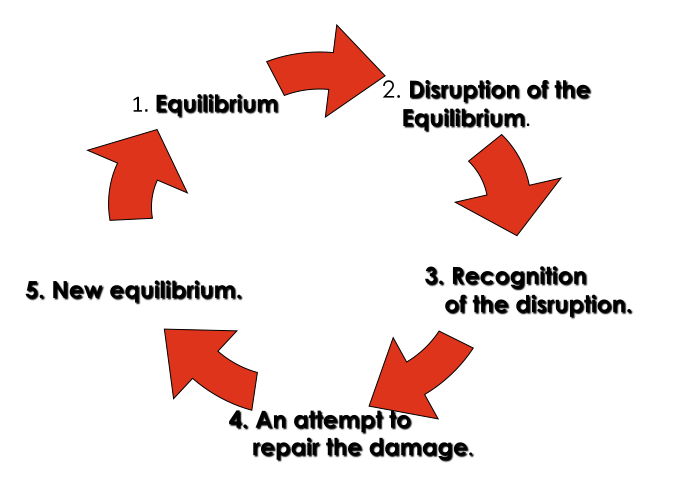
Proposed a basic structure for all narratives. He stated that all films and programmes begin with equilibrium, a calm period. Then agents of distribution cause disequilibrium, a period of unsettlement and disquiet. This is then followed by a renewed state of peace and harmony for the protagonists and a new equilibrium brings the chaos to an end. For example Avengers Infinity war and Endgame.
Barthes Theory:
Theorised about enigma codes and action codes. Enigma codes refers to the audiences questions of the narrative. Why is there a person standing there? Action codes are about the audience thinking of what will happen next?
argues that genres offer audiences a set of pleasures. There are emotional pleasures, Visceral pleasures and Intellectual pleasures.
--------------------------------------------------------------------------------------------------------------------------
Mise on scene:
- Foreground and background - determines audiences focus
- Lighting - Determines what the audience can and can't see
The key light is the brightest and most influential
The back light helps counteract the effect of the key light or creates an outline or silhouette
The fill light helps to soften harsh shadows that the use of key and back lights create
- Costume
What the characters are wearing
- Props
What items can be seen in shot
- Setting
Where the shot is
- Colour palette
Colours you can organically see on set
Colour grading
Using a filter over the lights
- Hair and makeup
How a characters hair and makeup is done
Can make the videos better
- Performance
Body language and facial expressions
Camerawork:
- Camera movement
Pan - moving the camera from side to side
Tilt - moving the camera up and down
Crane shot - starts low and swoops upwards giving a wider shot
Tracking shot - tracks the person in the shot
Steadicam/handheld - no support to make it seem as if its movement of a person
- Camera angle
Low angle - makes the character seem in a position of power
High angle - makes the characters seem vulnerable and puts the viewer in a position of power
Over the shoulder - looks over the shoulder of a character to see what they are looking at
- Shot size
Extreme close up - small area of something for example an eye
Close up - neck and face
Long shot - Top to toe and more of the location
Wide shot - Shows a vast area for example a shot of the New York sky line
Medium shot - torso upwards
Point of view - what a character can see from their eyes
Editing:
- Speed of editing and creating pace
- Length of cuts
- Transition - how it moves from one cut to another
Straight cut - most common and "invisible" form of transition.
Fade - A gradual darkening or lightening of an image until the screen becomes completely black or white. Typically used to show the passing of time
Dissolve - Dissolving one shot off the screen while another scene is fading in. The audience will be able to see both shots on screen at the mid point of the dissolve.
wipe - One image is pushed off the screen by another. Images signals a movement between different locations that are experiencing the same time.
Sound:
- Diegetic
For example, Dialogue, sound effects and music with a source within the text.
- Non Diegetic
For example voiceover, soundtracks and captions
- On screen sound
- Off screen sound
- Parallel sound
- Contrapuntal sound
- Sound bridge
This post contains theories AND the 4 areas of Media Language. There are lots of really important notes here, this will be a good revision source.
ReplyDeleteMoving forward, try and include images as examples (e.g. what is a close up?) to help embed your understanding.
Well done,
Miss C